‘They fumble with things’: How to spot a stoned customer
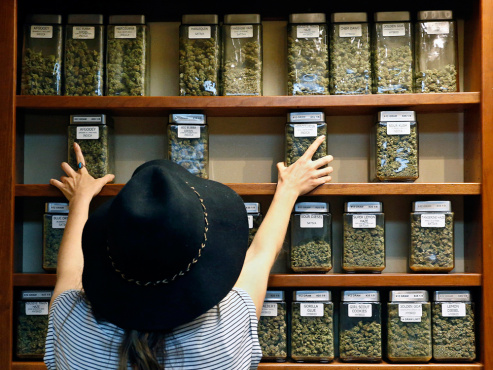
Government-mandated training for Ontario cannabis retailers will include a set of guidelines to assist clerks in the delicate task of spotting intoxicated customers and refusing to serve them.
The program, to be completed by every person working in Ontario’s private cannabis retail sector when it launches in April, provides a list of tell-tale signs, including “dry mouth,†“inappropriate sweating†and “inappropriate speech volume.â€
“(Intoxicated people) fumble with things,†said Andrew Murie, chief executive at Mothers Against Drunk Driving Canada, which designed the training in partnership with the cannabis technology company Lift & Co.

Screen shot from the training course. Screen shot
“As they’re putting their card in, and they have to put their pin number in, they’ll fumble with that,†Murie added. “Speech is a real big thing — it goes high, it goes low…. There’s a delayed reaction when you ask them a question. They’re kind of looking off to the side.â€
- How Big Cannabis is pursuing a back door into Ontario’s retail pot regime
- CBD is not addictive and does not get you high — yet in Canada it’s treated like a psychoactive drug
- Ontario’s rules restricting pot producers’ store ownership could throw retail partnerships into disarray
The new certification program, called CannSell, is the only training program approved by Ontario’s Alcohol and Gaming Commission board of directors. The agreement does not include “any monetary transaction†between the government, MADD and Lift & Co., according to Lift.
All employees at Ontario’s first tranche of 25 private retail stores are required to complete the training — which costs $49.99 — before their first day of work. The training will be available starting Monday.
Asked if the tips on identifying intoxicated customers might inadvertently see sober people turned away simply for being clumsy, Murie insisted that clerks are only advised to refuse service after noticing a combination of signs, not just one.
“One of the fundamental questions right off the bat was: If you smell cannabis on somebody, is that enough to say you’re not going to serve them? We had to go, ‘No that’s not enough,’†he said. “This is not about use of cannabis; it’s whether they’re intoxicated…. We’re looking for gross signs of intoxication — where it’s really obvious … something’s not right about that individual.â€
Screen shot from the training course. Screen Shot
This is not about use of cannabis.... We’re looking for gross signs of intoxication, where it’s really obvious ... something’s not right about that individual.
Andrew Murie, CEO, MADD Canada
On top of the guidelines for responsible sales, the CannSell training also focuses on cannabis history in Canada, federal and provincial legislation, compliance obligations and the risks and harms of cannabis.
The online training — with interactive segments and videos — is expected to take four hours on average. The point, the government said earlier this month, is to make sure “those who are selling (cannabis) understand its various forms, effects and consequences of use.†Once the training is finished, there is an exam. A sample exam, provided to reporters during a preview on Wednesday, includes questions on Ontario and Canadian law, as well as more esoteric questions such as, “Which terpene smells similar to lavender?†(The answer is linalool.)
Trainees must achieve 80 per cent on the exam to get their certification. If they fail twice, they have to pay another $49.99 to retake the course.
Lift CEO Matei Olaru said that was similar to Ontario’s bartending certification, Smart Serve, which also requires a retake if a student fails twice.
“It should be strict,†he said. “You’re selling a product that can affect someone’s consciousness and state of being. You better know what you’re doing.â€