Legal hemp opens the door for U.S. cannabis companies to jump ship and list on big stock exchanges
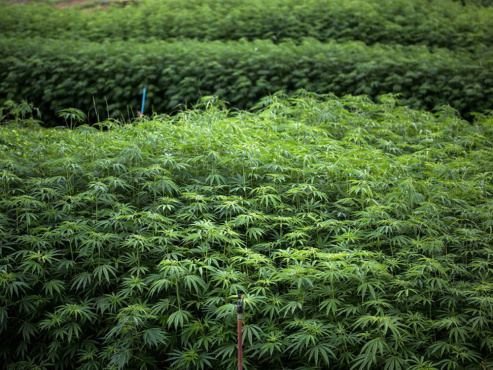
TMX Group Ltd., operator of the Toronto Stock Exchange, scored a coup of sorts last week when Boulder, Colorado-based Charlotte’s Web Holdings Inc. said it will delist from the Canadian Securities Exchange and list on the TSX.
This marks the first U.S.-based cannabis company to trade on the main Canadian bourse, which has prohibited listings from companies that are breaking the law where they operate. Cannabis remains federally illegal in the U.S. but Charlotte’s Web makes hemp-derived CBD products, which were legalized with the passage of the farm bill in December.
The Charlotte’s Web listing is likely to be the first of several, said Loui Anastasopoulos, TMX’s president of capital formation for equity markets.
- In the U.S., there’s no limit to how much CBD can be added to food. But an FDA review may change that
- Green Growth Brands signs deal to bring CBD body scrubs and bath bombs to Abercrombie & Fitch
- Martha Stewart teams up with Canopy Growth to help develop CBD products for humans and animals
“We have a healthy pipeline of CBD and hemp companies,†Anastasopoulos said in a phone interview. “We’ve been speaking to them for quite a long time, even before the passage of the bill, in anticipation that things were going to change.â€
It may also mark an exodus of hemp companies from the smaller, venture-focused CSE, which has been the main beneficiary of TMX’s policy of not listing U.S. pot companies.
“I think the Charlotte’s Web move from CSE is a bit of a growing trend of CSE listings that are choosing to move to our marketplace,†Anastasopoulos said. “We’ve seen six of those happen over the last six to 12 months and now with the ability to play in the CBD space we’re having discussions with others as well.â€
CSE Chief Executive Officer Richard Carleton declined to comment other than to say “we wish our friends at Charlotte’s Web well.â€
Charlotte’s Web CEO Deanie Elsner said on an earnings call the move will provide the company with “a larger reach to international institutional investors, enhanced liquidity, specialized indices, greater visibility and opportunities for greater coverage internationally.â€
Chief Financial Officer Richard Mohr also raised the prospect of a dual listing on either the New York Stock Exchange or Nasdaq, saying he’s had conversations with both bourses. Neither has listed a hemp company to date but TMX’s move indicates that the big U.S. exchanges might not be far behind.
TMX is also set to secure its first Israeli cannabis listing after medical pot producer Breath of Life International Ltd. filed for an initial public offering on the TSX. The medical pot producer “has the potential to be one of the largest life sciences IPOs that we’ve seen in a long time,†Anastasopoulos said.
Edibles Frustration
Canada’s market for edibles and other alternative cannabis products will eventually be worth $2.7 billion (US$2 billion) annually, but consumers should temper their expectations in the early days, according to a new report from Deloitte.
The country, which legalized dried flower and oils in 2018, will add edibles, extracts and topicals to the list of legal products no later than Oct. 17 of this year.
The market has big potential, with edibles and other extract-based products expected to account for $1.6 billion of annual sales alone, Deloitte said in the report published Monday. However, “many of these products may not be available — or available in sufficient quantity — come October,†it says. “There will be missteps, delays and frustration.â€
The government has yet to release the regulations for the new formats, making it difficult for producers to prepare. This means “Cannabis 2.0†— the rollout of edibles and extracts — may be slow and plagued by early shortages, just like “Cannabis 1.0†was with legalization in 2018.
“It’s going to be a minimum of 24 months†before the industry normalizes, Jennifer Lee, Deloitte Canada’s cannabis national leader, said in a phone interview. “But on the flip side there is strong consumer demand.â€
In a survey of 2,000 Canadian adults, Deloitte found that nearly one in four Canadians already consume or are likely to consume edibles and other alternative cannabis products.
Current consumers of edibles say they spend nearly $16 a month under the table on gummies, more than any other edible category. It’s unlikely they’ll be made legally available because of their appeal to children, according to the report.
Lee said that’s unlikely to damp demand. “I don’t think you won’t engage with the category because you can’t get gummy bears.â€
Bloomberg.com