How Ontario weed deserts — municipalities that have outlawed pot stores — allow the black market to flourish
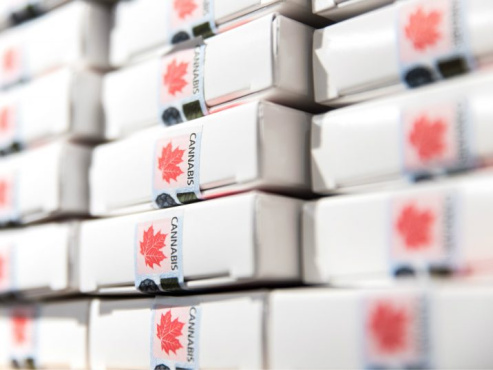
This month Ontario opened its first brick and mortar cannabis shops, finally catching up with the rest of the country. However, the appearance of fashionable, though still scarce, stores has drawn attention to another trend in marijuana retail: weed deserts — municipalities that have outlawed legal cannabis shops.
Mississauga is one of these deserts, yet it’s also home to TerrAscend, the largest licensed producer of cannabis in an urban setting in Canada.
Nuggets with purple crystals the size of movie popcorn, the marijuana grown at TerrAscend is harvested from 600 plants pruned by experts and hand-trimmed beneath 50 lights, creating a 60,000-watt environment of perpetual spring.
Before being made legal for tender, each TerrAscend gram is inspected by master growers and third-party accredited independent laboratories, who ensure that the cannabis is free of mould, bacteria, and heavy metals. They also check, importantly, for pesticides like myclobutanil, which are cheap, work well for growing cannabis, and are rampant in the marijuana black market, even though they can turn into cyanide when they’re smoked.

Mississauga is one of these deserts, yet it’s also home to TerrAscend, the largest licensed producer of cannabis in an urban setting in Canada.
According to TerrAscend CEO Michael Nashat, a pharmacist with a post-doctoral fellowship in neuroscience raised two blocks away from the Mississauga-based company he now runs, the legal dispensary decision in Mississauga is mistaken and will be overturned.
“We see ourselves as contributors to society and the economy and believe Mississauga could benefit from being in this economy while protecting its citizens,†he said.
It’s hard to imagine visiting Niagara-on-the-Lake or the Okanagan Valley and purchasing moonshine in a former pawn shop, yet in the weed desert of Mississauga, this is what’s happening today — even after the first brick and mortar shop has opened on Queen Street West in Toronto.
Pot isn’t outlawed in a weed desert. It’s legal to order CBD God Bud by TerrAscend in Mississauga from the Ontario Cannabis Store, grow up to four plants per household, or else make a purchase from a legal dispensary in Brampton or Burlington. But like Oakville, Vaughan, Markham, Pickering and Richmond Hill, Mississauga is one of the 77 municipalities in Ontario that banned cannabis stores before the January deadline.
This has essentially created a weed desert, a place with a retail vacancy that the black market is eager to fill.
It is reasonable to believe there’s consumer demand to see product, receive it at the moment you want it, and ask questions before making a cannabis purchase. But weed deserts don’t allow this. The black market that inevitably pops up in one, does.
“It’s not fair for legal Mississauga businesses, and right now, the opportunity is for illegal businesses who want to operate here,†said Nashat, who has welcomed city councillors, MPPs and MPs to his facility, which employs 110 people.
“I don’t think, in the long-term, Mississauga wants to benefit illegal local operators or border towns and unlike a business operating illegally, if we could sell cannabis we’d ensure we have every safeguard. We’re a large, publicly-traded company — the risk is all mine.â€

It is reasonable to believe there’s consumer demand to see product, receive it at the moment you want it, and ask questions before making a cannabis purchase. But weed deserts don’t allow this. The black market that inevitably pops up in one, does.
***
Dave Barrow, the fourth-term mayor of Richmond Hill, said he had an open mind when it was time to decide whether or not his municipality should sell weed in local stores. While he’s never smoked himself, he has friends who imbibe and doesn’t feel strongly about pot either way. However, as the opt-in date for brick and mortar shops was approaching, he found good information from the federal government impossible to receive.
“Every time we turn around and the word cannabis comes up, ‘Do we know how it will work? Do we know what it costs? Does anyone?’ No, no, they don’t,†Barrow said during an interview in his office.
According to Barrow, the nail in the coffin for Richmond Hill cannabis shops occurred during a meeting arranged by his MP Leona Alleslev, with the former Toronto police chief and minister responsible for administering the Cannabis Act, Bill Blair. Barrow knows Blair from years of service on the York Regional Police Services Board, and respects him. However, he was turned off by what he heard.
“(Bill Blair) always was the guy who had the answers, but he didn’t come up here to explain how this thing was going to work, he came up here to sell it to us,†Barrow said. “At the end of the day, we thought: it’s not well organized, it’s not well protected and why would we want to be involved.â€
Whether or not a municipality chooses to become a weed desert, the market finds a way to meet consumer demand.
There are still many unlicensed, unregulated black markets operating across the country, even in cities where pot stores are legal, including Kamloops, B.C.
Last month, the Phyven Medicinal Cannabis Dispensary, an illegal pot store, was robbed.
One man carried a shotgun.
“That could happen in any retail outlet, but legal retail cannabis outlets have to have a security plan in place that reduces the risk of this type of event,†said Terry Lake, former mayor of Kamloops, and currently vice president of social responsibility at HEXO, a publicly held Gatineau-based cannabis producer. Lake believes that since illegal dispensaries operate outside the law, they’re less inclined to screen customers and products.
It’s a dangerous unchecked revenue drain.
“You’re not only paying law enforcement to shut these places down, but you’re missing out on legitimate revenue from cannabis that comes to all levels of government,†he said.
Amy Delisle agrees. The partner at Keyser Mason Ball, LLP, leads the firm’s branding and franchise group. A mother of two, Delisle lives in Oakville, a town between Hamilton and Toronto with a population nearing 200,000, that opted out of hosting cannabis retail shops.
“Residents here can still purchase cannabis easily, our decision only ensures that Oakville does not benefit from these purchases,†she said, adding that she understands why municipalities are opting out of the cannabis business, because the rules seem unclear and shifting. Nevertheless, she sees the potential in cannabis retail to challenge alcohol and beer sales.

There are still many unlicensed, unregulated black markets operating across the country, even in cities where pot stores are legal, including Kamloops, B.C.
“Obviously this is going to be a huge area of retail, there’s no question,†she said. “There will be cannabis stores in most Canadian cities within the next five years.â€
***
Meanwhile, there are two illegal dispensaries within two kilometres from TerrAscend in Mississauga.
The first location, the busiest storefront in a strip mall along a major thoroughfare, is claustrophobic, with blacked-out walls, the shades drawn and a crowd of five men, one speaking loudly on his phone. It’s run like a speakeasy-meets-deli counter, where customers place an order with an attendant behind a wall of glass and receive a number. While they wait, they can watch the budtenders in gloves prepare the weed in the back of the store on a screen just beneath the ceiling. In less than five minutes, a man slides the order through a semicircle cut in the glass.
A kilometre southeast is another cannabis dispensary, this one in a large, empty storefront with a couch arranged before a flat-screen TV, where a man sits eating lunch. There’s nothing else in the space except a single, dying plant and here pre-rolled joints cost $7, three for $15, which is roughly in line with what it costs at the Ontario Cannabis Store.
Both the product and the shopping experience are bleak.
Michael Nashat, the CEO of TerrAscend, believes this cannabis retail environment in Mississauga will soon change.
“The black market shops are opening every day here because there’s demand and people are chasing that experience, but, in the end, I think Mississauga will opt in and leave the retail experience to the professionals,†said Nashat, adding that he recently signed a purchasing agreement for Apothecarium, a dispensary chain in California and Nevada that was recognized by Architectural Digest. This is closer in line to what customers are already experiencing in provinces outside Ontario and what Ottawa, Kingston and Toronto have opened this month.
“If we could have a retail store here, we’d be a force to reckon with,†Nashat said. “We’d have the safeguards in place and offer the citizens of Mississauga the experience we know they want, and they deserve.â€
Â
Want to keep up to date on what’s happening in the world of cannabis?  Subscribe to the Cannabis Post newsletter for weekly insights into the industry, what insiders will be talking about and content from across the Postmedia Network.