Going green with cannabis on St. Patrick’s Day? Here’s how you can avoid a weed hangover
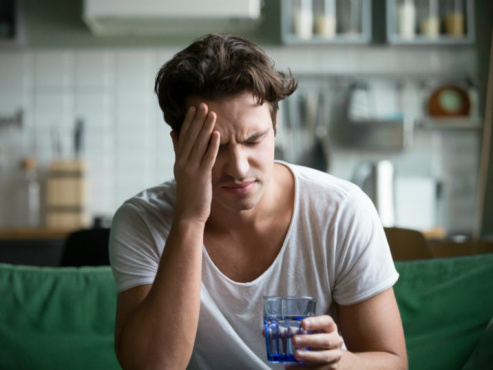
On Feb. 2019, TGO published a story on how a Canadian supplement company was aiming to mitigate marijuana’s negative effects, including hangovers. The topic of whether or not marijuana causes hangovers led to a spirited debate.
Â
Â
“Some users have reported that they have never experienced a cannabis hangover. So, there is a gamut of individual experiences based on anecdotal evidence,†says Thomas Folan, MD, CEO and founder of SolaceMD, an online medical cannabis information, recommendation and consultation platform. “As with so many other areas of cannabis research, more well-performed trials are needed to fully understand what is going on,†Folan notes.
The symptoms of a weed hangover range from headache, nausea, brain fog, dehydration, lethargy to dry eyes. Overconsumption, like it is with alcohol, is the key.
Bethany Rae, founder of Flower & Freedom, a community exploring cannabis use for fitness, admits to experiencing brain fog and a feeling of lethargy when she goes over her sweet spot. “The term hangover doesn’t necessarily make sense to me. But I have experienced brain fog and the feeling of lethargy from overconsuming cannabis—particularly from too many edibles.†Rae uses cannabis for pain relief, anxiety and depression. “I understand cannabis to be a lot like food, and not so much like alcohol or tobacco. When you have education around nutrition, you know what to eat and how much. With cannabis, it’s the same; understanding the amount and strain type is crucial,†she says.
What do the studies say about cannabis hangovers?
Conclusively, not a lot. There’s lack of extensive research done on this topic, and two most commonly known studies were conducted in 1985 and 2006.
The study conducted is 1985 saw participation from 13 male marijuana smokers. The purpose of the study was to determine whether marijuana smoked in the evening would result in subjective or behavioural effects the following morning. “The findings suggest that marijuana smoking can produce residual (hangover) effects the day after smoking. The precise nature and extent of these effects, as well as their practical implications, remain to be determined,†notes the study abstract.
The one published in 2006 examined the association among cannabis use and cognitive performance, mood and human error at work. “The pattern of results suggests two possible effects. First, a hangover-type effect that may increase with frequency of use; second, a subtle effect on cognitive function, perhaps more apparent under cognitive load and/or fatigue, which may increase with more prolonged use,†reads the study published in the Journal of Psychopharmacology.
Folan points out that “the 2006 study was confounded by concomitant alcohol and tobacco use, so the results must be considered in that light.â€
Hangovers: Cannabis versus alcohol
Despite the similarities, alcohol hangovers are more severe and have been reported to induce coma and even cause death.
Unlike cannabis, “the alcohol molecule actually suppresses the hormone in the body that is supposed to hold onto water—appropriately named anti-diuretic hormone, or ADH. This is why people will talk about breaking the seal and attempting to hold out urinating when drinking,†says Folan. “It also explains the reason behind being dehydrated after a drinking session despite (potentially) imbibing copious amounts of fluid. Upon overindulgence, the body’s alcohol dehydrogenase (the enzyme used to break down alcohol) cannot work any faster than if you just had a beer or two. This is not how it is with most substances, including cannabis overconsumption,†he explains.
Is confusion around usage contributing to hangovers?
More than half of respondents (56 percent), who participated in a 2018 survey by Shopper’s Drug Mart in partnership with Environics Research, admitted that with so many different strains and brands, medical cannabis is really confusing. The survey reviewed data from among 1,000 Canadian adults over 18 and years of age or older.
Gerald Major, president and CEO of Canadians for Fair Access to Medical Marijuana, is not surprised. “Cannabis is a medicine, first and foremost; and for those reasons, absolutely requires expert advice. Imagine someone over the age of 50 taking gummies. What if they can’t gauge the dosage and end up taking 100 mg of cannabis? I am certain that would require an emergency visit to the hospital.†A medical cannabis patient himself, Major adds, “you can take cannabis for seizures, Post-traumatic stress disorder, arthritis… but if you are not taking the right thing, then the medical properties that would help with, say, seizures can cause negative effects.â€
Source of your cannabis can play a huge role
The product needs to well-sourced and “devoid of contaminants, pesticides and solvents, which could potentially be contributing to side effects and/or hangover,†Folan points out.
Andrew Gordon, senior vice president of strategic partnerships and community at cannabis retailer Kiaro, agrees. “The good news is in a regulated market, one can be assured that the products have been tested for pesticides and residual solvents.â€
While the issue of cannabis hangover should be taken seriously, Gordon says, “I also want us to be mindful of a larger hangover—prohibition hangover, one that’s still in the air post-legalization, and affects people, in terms of asking questions or getting involved.â€
While cannabis is not harmless, “as a society and as retailers working with regulators, we need to be proactive in interacting with existing and prospective consumers to help reduce stigma and normalize cannabis use in a meaningful way,†he adds.
Â
Want to keep up to date on what’s happening in the world of cannabis?  Subscribe to the Cannabis Post newsletter for weekly insights into the industry, what insiders will be talking about and content from across the Postmedia Network.