Crackdown on B.C.’s illegal pot shops slow in coming
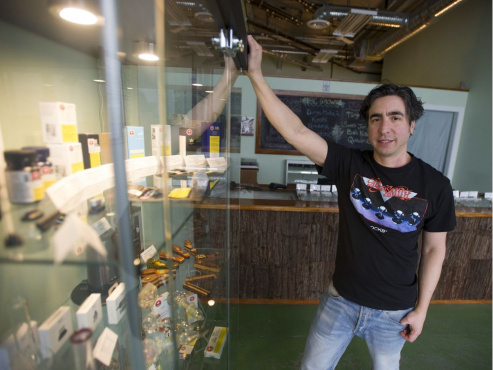
Six months after cannabis became legal in Canada, dozens of dispensaries continue to operate without a provincial license in B.C. as both local governments and the province struggle to shut them down.
The robust illicit market, including “grey-market dispensaries,†were cited as the reason B.C. lags behind other Canadian provinces in legal cannabis retail sales in a recent report by Arcview Market Research.
Analyst Tom Adams wrote that legal retail outlets at the outset of legalization constitute “a drop in the proverbial bucket compared to the hundreds of ‘grey’ market unlicensed stores,†mostly in B.C. and Ontario.
The grey market will “hold back, to some degree, the legal market in that not all (illicit) operators will either get licensed or go away,†predicted Adams, managing director and principal analyst with Colorado-based BDS Analytics, which conducted the research in conjunction with California-based Arcview.
The City of Vancouver has identified 20 cannabis dispensaries still operating without provincial licenses, Kathryn Holm, the city’s chief license inspector, told Postmedia earlier this week.
Nine of the 20 are participating in a test case before the B.C. courts.
On Dec. 13, B.C. Supreme Court Chief Justice Christopher Hinkson ordered the unlicensed shops to shut down, and he backed the City of Vancouver’s position that it has the authority to license and zone for the businesses.
Some of the dispensaries appealed that decision, Holm said, and “the city will await the outcome of the appeal before determining next steps.â€
The city has filed or is preparing to take legal action against the 11 dispensaries that are not part of the appeal.
“The screws are tightening†on all shops, not just those involved in the court case, said cannabis activist Dana Larsen, who operates two of the dispensaries that are part of the appeal.
Larsen said the city has sent warning letters to his landlords about allowing the unlicensed businesses. To his knowledge, the city hasn’t moved on its injunction capability.
“I don’t think the city wants a big confrontation,†said Larsen. “I think they’ll use bureaucratic means. Although I wish they would spend their time and energy on making a better legal system instead.â€
Larsen estimated about a dozen illegal dispensaries, some that were licensed under the city’s pre-legalization scheme, have closed in the last year. He expects to learn the outcome of the court case by mid-May.
Meanwhile, the provincial government is putting together a new Community Safety Unit (CSU) within the Ministry of Public Safety and Solicitor General. CSU officers have started visiting unlicensed shops to raise awareness and education.
“Those operating illegally should be warned that they could potentially receive a visit from CSU officers in the very near future, as initial operations have begun to roll out,†said a statement from the Ministry of Public Safety and Solicitor General.
“Illegal retailers that do not obtain a provincial licence will have to close — and as more legal retail stores open across the province, you can expect to see increasing enforcement action by the CSU.â€
Once fully staffed, the CSU will have 44 full-time staff operating out of four regional offices.
The team will conduct inspections and investigations, “seizing cannabis that is possessed in violation of provincial legislation,†issuing violation tickets and fines. It will also apply to the B.C. Supreme Court for injunctions and make recommendations to the B.C. Prosecution Service when charges are warranted.
The ministry did not say when the team would be fully staffed and fully operational.
The owner of Evergreen Cannabis Store, Mike Babins, said he didn’t think the grey-market shops were negatively impacting his business. In fact, sales at his Vancouver shop are up compared to pre-legalization as more people try cannabis for the first time, or decide to try it again now that it is legal.
“No one thought that they would disappear overnight,†he said of the grey-market shops. “They’re doing what they do, and we’re doing what we do.â€
Babins called legalization a “processâ€.
Canadian Cannabis Media Corp. chief operating officer Ashley Hughes said she feels the market is “big enough for everyone who wants to comply.â€
The company expects to open its first legal store in Vancouver later this month.
“I’m glad that (the grey-market shops) are still there to help people, but I don’t think they’ll be around much longer,†she said.
Hughes called the process for becoming licensed “stringent†and likened it to an adventure, with “pivots and speed bumps along the way.â€
“It’s hard and it’s expensive, but at the end of the day, I do like the compliance part of it,†she said. “When it’s regulated, you know what you can do, and what you can’t do. It helps to clarify everything.â€
Related
- B.C.’s legal cannabis lagging in competition with ‘grey market’ marijuana
- Vancouver’s first B.C.-approved pot shop set to open its doors Saturday
- Cannabis – Vancouver Sun
— with file from Derrick Penner
twitter.com/glendaluymes