Born of real life: Weed the People now available through digital streaming platforms
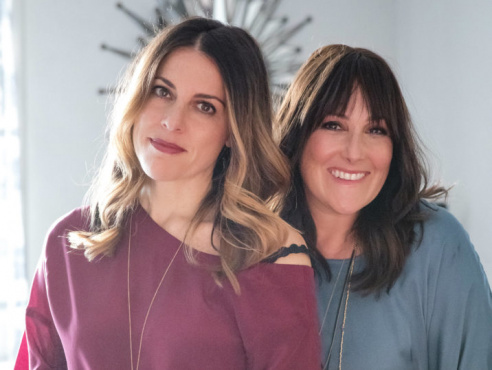
They may have broken the law making it, but Emmy Award-winning talk show host Ricki Lake and director Abby Epstein are happy to see their filmmaking efforts driving new conversations about cannabis as a medicine.
In Weed the People, Lake and Epstein follow five kids whose families turn to cannabis medicine at a time when California cannabis laws were precarious and the medicine misunderstood. The film was released theatrically last October, the same week Canada made recreational cannabis legal, and has recently become available on several digital streaming platforms, including iTunes and Amazon Prime.
Â
Â
Sowing the seeds of Weed the People
“The project stems from life experience for me,†Lake tells The GrowthOp, “but then Abby had the foresight to see the big picture, and that was the birth of Weed the People.â€
The life experience Lake is referring to starts with her late ex-husband, Christian Evans, who used cannabis for his health, plus providing it to his grandfather, who was fighting bone cancer. She then met a young fan of the television program, Dancing with the Stars, over social media, whom she later moved into her home with Evans for six weeks while the girl sought treatment for her disease, in California.
She did not have a cancer diagnosis, but neurofibromatosis type 1 (NF-1) is similar in that its tumours are treated with chemotherapy and cannabis is considered an alternative option. Though this young girl was the inspiration for the movie, Lake says that story is not in the final film.
Building on a comfortable collaboration
Lake and Epstein’s previous filmmaking collaboration, The Business of Being Born, examines the ways the U.S. healthcare system approaches childbirth, and like Weed the People, includes moving testimonies from both parents and doctors at the forefront of a medical disruption.

Weed The People poster
One of the standout subjects in the latest documentary is Mara Gordon, who previously worked as a process engineer and, at the time of filming, was creating cannabis oil medicines for seriously ill patients. “She was just such an amazing character,†Epstein tells The GrowthOp, describing Gordon as like a Jewish grandmother making cannabis oil in her kitchen in suburban San Francisco. “We just knew she was the real deal,†she says.
To see the results of Gordon’s medicine and treatment protocols is remarkable, both in treating the side effects of chemotherapy and its apparent impact on tumours. All but one child profiled in the film are living today; one, a boy named Chico Ryder, now has his own cannabis farm where he grows medicine for patients.
Gordon went on to become chief research officer of GABY, which houses her two companies, Aunt Zelda’s and The Oil Plant, and allows her to manufacture medicines at scale.
Learning to fail to succeed
There are moments in the film where cannabis, for one reason or another, fails. Like when Chico’s mom, Angela Ryder, opens jars of cannabis oil and smells isopropyl alcohol, a toxic substance if ingested. “That was just heartbreaking,†Epstein says. “It’s so complex because we know the woman who the stinky oil came from and she continues to operate in this business, and people think that she’s well-meaning and a good person. That’s how complicated it is,†she says.
Lake and Epstein describe what it was like to capture this side of the medical cannabis industry as something out of AMC’s critically acclaimed series, Breaking Bad.
“One thing you don’t see in the film,†Epstein says, “is that Mara Gordon got in her car during a CBD shortage, with her husband, and drove 10 hours to get CBD to bring to Chico’s house that day.â€
Filmmakers got close to subjects
Behind the scenes, the filmmakers admit to becoming familiar with their subjects, going so far as to bring medicine beyond California’s legal borders to A.J., a terminally ill boy in Chicago. “We crossed many lines to make this film and to help these kids,†says Lake.

Mara Gordon, who at the time of filming was creating cannabis oil medicines for seriously ill patients, is now chief research officer of GABY, which houses her two companies, Aunt Zelda’s and The Oil Plant.
Like in The Business of Being Born, the filmmakers don’t stop with their subjects; they dig deeper into the science. With Weed the People, that meant including an explanation of the medicinal components of cannabis and how they work on cancer, speaking to doctors in Israel, researchers in Spain and even Canada’s Dr. Mark Ware, chief medical officer at Canopy Growth Corporation.
For Lake, this movie is about changing the public’s perception of the cannabis plant and presenting it as a human rights issue. “It’s been amazing to see the number of U.S. states that have gone legal, both medicinally and recreationally,†she says, “and I think we’ve helped to pass new bills. We brought the film to Oklahoma two weeks before its referendum, and that passed.â€
Ricki Lake, Abby Epstein and Mara Gordon will appear with Dr. Bonni Goldstein and Tracy Ryan, also from the film, at O’Cannabiz Conference & Expo, April 25 to 27, in Toronto.
Â
Want to keep up to date on what’s happening in the world of cannabis?  Subscribe to the Cannabis Post newsletter for weekly insights into the industry, what insiders will be talking about and content from across the Postmedia Network.